

Ford AWD Vehicle Guide

All Wheels, All Roads
When navigating unpredictable weather, challenging terrains, or ensuring your family’s safety on the road, all-wheel drive vehicles offer more confidence and control when driving. At Blake Ford, we’re proud to offer a lineup of Ford all-wheel drive vehicles designed to excel in every condition, from snow-covered highways to off-road trails, showcasing how Ford offers this feature across various models. Whether you’re considering a compact SUV like the Ford Escape, a rugged off-roader like the Ford Bronco, or a powerhouse like the Ford Super Duty, Ford’s advanced all-wheel drive systems provide the traction, stability, and versatility to tackle any journey. Visit us today in Franklin, VA!

Ford Bronco AWD System Explained
If you’re an off-road enthusiast, the Ford Bronco is a dream come true, offering unparalleled performance for serious off-roading across challenging terrains. Available with either four-wheel drive or an advanced all-wheel drive system, the Ford Bronco delivers unparalleled performance across challenging terrains. Its G.O.A.T. (Goes Over Any Terrain) Modes™ let drivers select from settings like Sand, Mud/Ruts, and Rock Crawl, ensuring that the Ford Bronco adapts to the toughest environments. With optional features like the Trail Control™ system and available locking differentials, the Ford Bronco surpasses traditional all-wheel drive capabilities. Whether scaling rocky inclines or navigating dunes, the Ford Bronco offers an unparalleled, dynamic off-road experience.
Ford Maverick AWD System Explained
The Ford Maverick redefines compact pickups by offering practicality, fuel efficiency, and, most importantly, an available all-wheel drive system, making it a standout Ford vehicle. The Ford Maverick’s all-wheel drive system is designed for drivers who want the functionality of a truck without sacrificing maneuverability or efficiency. This system uses advanced sensors to monitor wheel slip and distribute torque between the front and rear wheels as needed, ensuring optimal traction on slippery surfaces or uneven terrain. Whether navigating snow-covered roads or venturing onto a gravel path, this Ford’s all-wheel-drive system delivers confidence and control. With its impressive towing capacity and smart hybrid powertrain option, the Ford Maverick is a standout choice for compact truck enthusiasts.
Ford Edge AWD System Explained
The Ford Edge is a midsize SUV that balances performance with practicality. Ford’s Intelligent AWD system constantly monitors road conditions and adjusts torque distribution for seamless transitions between front-wheel and all-wheel drive, ensuring optimal power to the front wheels when needed. This proactive system enhances stability in inclement weather or turning corners, making the Ford Edge an excellent option for families or professionals prioritizing safety and comfort.
Ford Escape AWD System Explained
The Ford Escape stands out with its advanced all-wheel drive system for those seeking a compact SUV. Designed for adaptability, the Ford Escape’s available Intelligent AWD can anticipate wheel slip and preemptively send power to the wheels that need it most. This makes it ideal for drivers who frequently encounter changing road conditions, from city streets to rural back roads. The Ford Escape’s all-wheel-drive system pairs perfectly with its available hybrid and plug-in hybrid powertrains, allowing for an eco-friendly ride without compromising capability.
Ford Explorer AWD System Explained
The Ford Explorer is synonymous with adventure, and its available all-wheel-drive system is a major contributor to its go-anywhere capability. Featuring an optional Intelligent 4WD system and a standard Terrain Management System™, the Ford Explorer is ready to tackle diverse environments with ease. Drivers can choose from multiple drive modes, including Normal, Eco, Sport, Slippery, Tow/Haul, and Trail, tailoring the performance to their surroundings. Whether driving through heavy rain, navigating icy roads, or exploring on paved trails, the Ford Explorer’s all-wheel drive system provides the traction and stability you need.
Ford F-150 AWD System Explained
The Ford F-150, America’s best-selling truck, combines rugged durability with advanced technology, including an available all-wheel drive system. For most configurations, the Ford F-150 features an Electronic-Shift-On-The-Fly system, allowing drivers to easily switch between 2WD, 4WD High, and 4WD Low, depending on the road’s or trail’s demands.
Ford Super Duty AWD System Explained
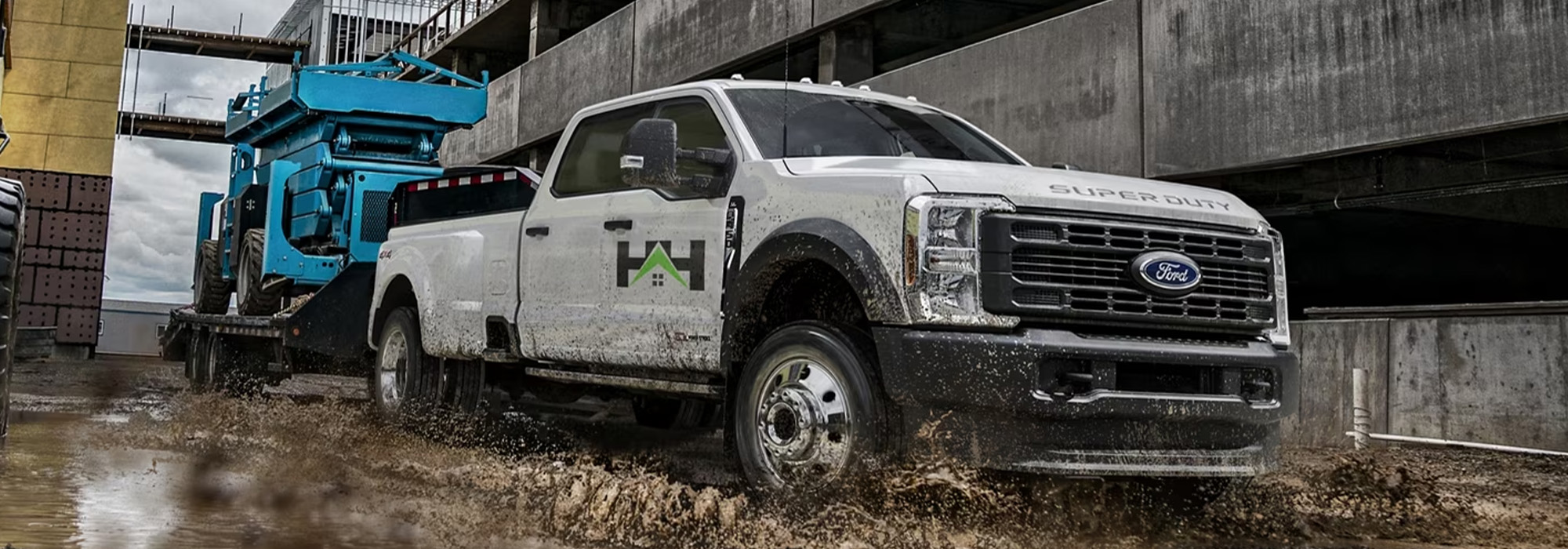
When it comes to heavy-duty performance, the Ford Super Duty lineup sets the benchmark. Available in the Ford F-250, F-350, and F-450 models, the Ford Super Duty trucks offer advanced AWD and 4WD systems to conquer the toughest jobs. These systems include locking differentials, Electronic-Shift-On-The-Fly capability, and heavy-duty shocks to ensure stability and control even under extreme conditions. Whether hauling equipment to a job site or traversing muddy trails, the Ford Super Duty’s AWD system provides unmatched reliability and performance. With class-leading towing and payload capacities, the Ford Super Duty is engineered for professionals who demand the best.
Experience Ford AWD Vehicles at Blake Ford
No matter your driving needs, Ford AWD vehicles deliver the performance, safety, and versatility you deserve. At Blake Ford, we’re here to help you find the model that best suits your lifestyle. Visit us today to test-drive our lineup of Ford AWD cars and trucks and experience the difference firsthand. Let us show you why Ford continues to lead the industry in innovation and capability. Stop by Blake Ford today and take the next step toward adventure and confidence on the road.
Ford Snowplow Prep Package

Are You Ready For The Snow? Ford Snowplow Prep Package
Winter is right around the corner, and with it comes the challenge of managing heavy snowfalls. Whether clearing your driveway, helping out your neighborhood, or maintaining commercial properties, having the right equipment can make all the difference. At Blake Ford, we understand that snowplowing is a huge responsibility for your and your community’s needs. That’s why we’re proud to offer the Ford Snowplow Prep Package, an essential upgrade for drivers who need their trucks to handle winter’s toughest demands. This package is crucial in the snow removal industry, providing the reliability and specialized equipment necessary for efficient snow clearing. Visit us today in Franklin, VA!
What Is The Ford Snowplow Prep Package?
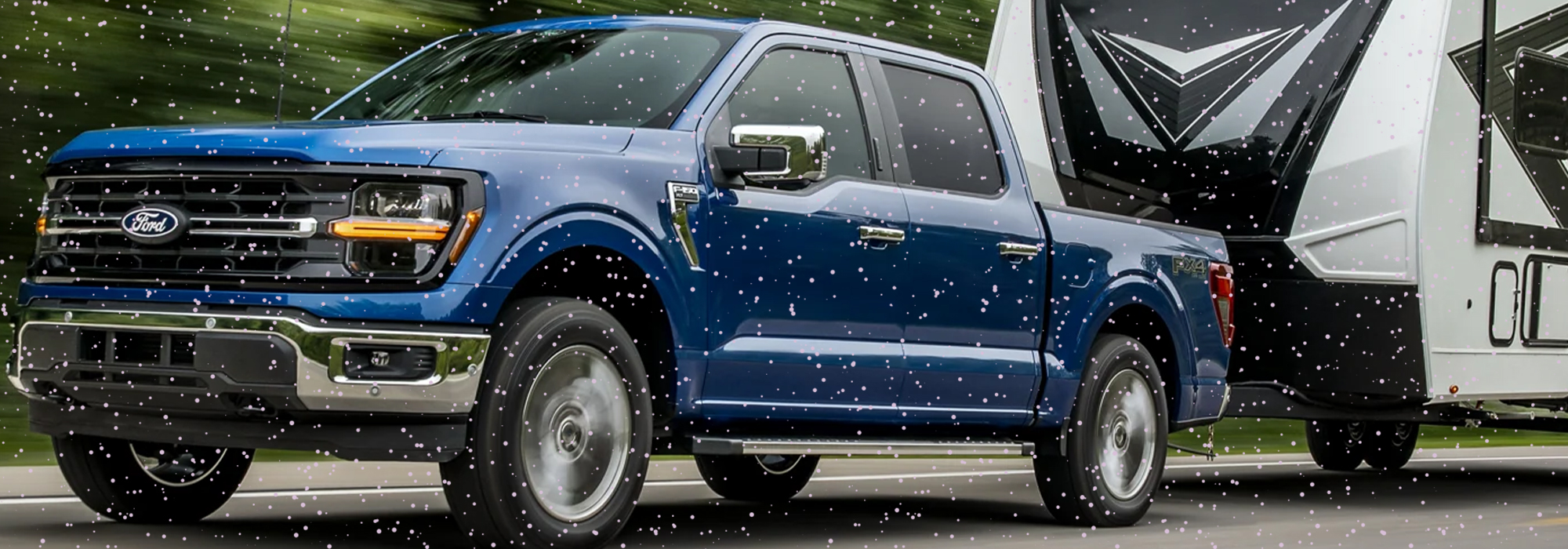
Snowplowing places immense demands on a vehicle, and not every truck is up to the challenge. The Ford Snowplow Prep Package is a tailored upgrade for select Ford trucks, created to enhance their performance under the weight of a snowplow. From reinforced components to enhanced electrical capacity, this package ensures that your truck is equipped to power through winter without compromising performance or safety. The package also includes mounting hardware, which is essential for handling heavier plows and improving efficiency for contractors dealing with snowy conditions.
Ford F-250 Snowplow Prep Package
The Ford F-250 Snowplow Prep Package is one of the most popular options for those needing a truck built for heavy-duty snow removal. Known for its strength and durability, the Ford F-250 is a workhorse that handles winter challenges with ease. Depending on your truck model, the Ford Snowplow Prep Package includes a 190-amp or 250-amp alternator, which ensures that your vehicle can handle the electrical load of operating a snowplow alongside other systems. Additionally, factory-installed wiring simplifies the process of attaching and operating a snowplow, saving you time and hassle in extreme winter weather. With this package, the Ford F-250 becomes a reliable partner for homeowners and contractors alike, making it the perfect choice for tackling snow-covered roads, driveways, and parking lots. The Snowplow Prep Package allows for the highest-rated plow weight in the segment, emphasizing its reliability and performance in snow and ice management.
Ford F-150 Snowplow Prep Package
While the Ford F-150 doesn’t come with a factory-installed Ford Snowplow Prep Package, it remains a versatile option for lighter-duty snow removal when equipped with aftermarket upgrades. Aftermarket kits allow you to add central features such as reinforced suspension and electrical modifications, turning the Ford F-150 into a capable winter warrior. This makes it an ideal choice for residential snow clearing and smaller-scale jobs.
Ford Ranger Ford Snowplow Prep Package
The Ford Ranger is another truck that, while it may be compact and agile, doesn’t include a factory-installed Ford Snowplow Prep Package at this time. However, aftermarket kits are available to prepare this mid-size truck for light snow-clearing tasks. The Ford Ranger’s small size makes it perfect for navigating small spaces, such as residential areas or small business properties, while still delivering reliable performance. Models equipped with the appropriate aftermarket enhancements, such as advanced transmission systems, offer enhanced control and performance in snowy conditions. When equipped with the appropriate aftermarket enhancements, the Ford Ranger may become a reliable and efficient tool for managing winter snow removal.
Ford Maverick Snowplow Prep Package
As a compact truck, the Ford Maverick may seem like something other than the obvious choice for snowplowing, but it can still handle light-duty tasks with the right aftermarket modifications. While there is no factory-installed Ford Snowplow Prep Package available, its innovative design and hybrid powertrain make it a practical option for occasional snow removal. The Ford Maverick may be able to serve as a unique and efficient winter solution for homeowners or small-scale snowplowing needs by adding the appropriate upgrades.
Benefits Of The Snowplow Prep Package
Investing in the Ford Snowplow Prep Package offers numerous advantages for truck owners who rely on their vehicles during winter. Some of the key benefits include:
Enhanced Safety
Reinforced components, such as heavy-duty front springs, improve truck stability and handling when carrying the weight of a snowplow.
Increased Reliability
Factory-installed features, such as upgraded alternators and wiring provisions, ensure your truck is ready to perform consistently in tough winter conditions.
Reduced Maintenance Costs
Well-designed systems minimize wear and tear on your vehicle, helping you prevent expensive repairs down the line.
Convenience
With factory-installed provisions, mounting and operating a snowplow is easier and faster than aftermarket solutions.

Clear Roads, Clear Mind
Regarding snow removal, having the right tools is key, and the Ford Snowplow Prep Package delivers the reliability and performance you can count on. At Blake Ford, we’re here to help you confidently navigate winter’s challenges, offering expert guidance on equipping your truck for the season. Don’t let snow slow you down — visit us today and get your truck ready for whatever winter throws your way. With the right Ford truck and the right prep, you’ll be clearing the path ahead with ease.
Ford Snow Mode Explained

Ford Snow Mode Explained: Improving Your Winter Driving Experience
When winter arrives and roads become slick, you need a vehicle that can safely handle snowy, icy, and rainy conditions. Ford Snow Mode enhances vehicle performance in winter by optimizing control and traction. At Blake Ford, we’re here to introduce you to Ford Snow Mode — a feature that offers enhanced control and traction during winter driving. Available across various Ford models like the Ford Explorer, Ford Escape, Ford Expedition, Ford F-150, and Ford Bronco Sport, Snow Mode is designed to keep you safe and steady on slippery roads. Let’s dive into Ford Snow Mode, how it works, and when to use it for the best driving experience this winter.

What is Ford Snow Mode?
Ford Snow Mode, sometimes called Slippery Mode, is a selectable drive mode designed specifically for slick surfaces, including snow, ice, and wet roads. It is designed to help navigate challenging terrains, including deep snow. Part of the Ford Expedition’s Terrain Management System™, Snow Mode is one of seven available drive modes and can also be found on other Ford models. Ford Snow Mode helps your Ford gain better traction in challenging winter conditions by reducing throttle response and smoothing gear shifts.
How Ford Snow Mode and Traction Control Work
When you switch your Ford to Snow Mode, several adjustments are made to optimize accelerator pedal response and performance on slippery surfaces. Here’s what changes.
- Throttle Response and Gear Shifting: Snow Mode reduces throttle sensitivity, making it easier to avoid sudden acceleration that could cause wheel spin. It also optimizes shifting, which means the vehicle moves into higher gears more smoothly to maintain stability. These adjustments contribute to improved performance handling in winter conditions.
- Four-Wheel-Drive Adjustments: If your Ford has a 4WD system, Snow Mode engages it to ensure all wheels receive power for improved traction.
- Stability and Traction Control: Ford Snow Mode fine-tunes systems like stability control, ABS, and traction control, helping to prevent skidding and enhance control.
- Driver Comfort Adjustments: Some Ford models even adjust the feel of the brake pedal and steering wheel to give the driver more precise control on slick surfaces.
Whether you’re driving a Ford Explorer, Ford Escape, or Ford Expedition, or Ford F-150, Snow Mode helps create a smoother, safer experience in winter conditions.
Benefits of Snow Mode
Using Ford Snow Mode offers several advantages, especially when driving in snow or on ice. Key benefits include:
- Improved Traction Control: Snow Mode minimizes wheel slip, giving you more control on snowy and icy surfaces.
- Enhanced Safety: Snow Mode keeps the vehicle stable, helping to prevent skidding and sliding.
- Optimized Performance in Snowy Conditions: Snow Mode optimizes the vehicle’s performance even in deeper or wetter snow by adjusting engine response and other settings.
Ford Snow Mode also optimizes performance in wet snow conditions, ensuring better traction and stability.
Comparison to Normal Mode
In Normal Mode, Ford vehicles balance performance, comfort, and fuel efficiency for everyday driving. Unlike Sport Mode, which enhances driving performance by increasing accelerator pedal response and lowering gear retention for quicker acceleration, Snow Mode dials down throttle response and prioritizes stability to match the demands of icy and snowy roads. If you switch back to Normal Mode, your vehicle’s settings will return to a more responsive driving style suited for dry roads.
When to Use Snow Mode in Deep Snow
Ford Snow Mode is ideal for:
- Snowy and Icy Conditions: Use it in snow, ice, or when the roads are slick due to freezing rain.
- Wet Conditions: Snow Mode can be helpful even on wet roads, providing added stability when rain reduces traction.
- Hilly Terrain in Snow: Snow Mode is beneficial when driving uphill or downhill on snowy or icy slopes.
How to Activate Snow Mode
Activating Ford Snow Mode is straightforward. On most Ford models, rotate the drive mode dial on the center console until you reach “Snow” or “Slippery” mode. Your instrument cluster display will update to show Snow Mode’s activated settings, including changes to traction and stability controls.
Tips for Winter Driving with Ford Snow Mode
- Consider Snow Tires: For the best winter performance, use snow tires or winter tires, which provide extra traction.
- Take it Slow: Snow Mode helps, but driving carefully is still essential. Avoid sudden movements and hard braking.
- Stay Aware of Snow Mode’s Limits: Snow Mode is an aid but isn’t a substitute for cautious winter driving practices.
Limitations of Snow Mode
While Ford Snow Mode significantly improves handling on slick surfaces, it may not fully compensate for very worn tires or highly icy conditions. Snow Mode can also feel slightly slower to respond, requiring more accelerator input to get up to speed.

Embrace Winter with Confidence
Ford Snow Mode is an invaluable tool for improving winter driving safety and comfort. The Ford Explorer’s Snow Mode, Ford Escape’s Snow Mode, Ford Expedition’s Snow Mode, Ford F-150’s Snow Mode, and Ford Bronco Sport’s Snow Mode make these popular models ideal for winter driving. By understanding how Ford Snow Mode works and knowing when to activate it, you can confidently navigate winter roads.
For a closer look at how Ford Snow Mode can benefit you this winter, stop by Blake Ford and speak to one of our team members. We’re here to answer your questions and help you choose the perfect Ford model for tackling harsh winter conditions.
Best Ford Models In The Snow

Prepare For The Winter Ahead
For those who live in colder climates or who frequently travel in snowy conditions, finding a car that can handle treacherous winter roads is essential for vehicle performance and safety. From SUVs to trucks, Ford offers a range of options that deliver superior handling, traction, and control even in the harshest conditions. At Blake Ford, we understand the importance of having a vehicle that can handle winter’s most challenging conditions with ease and reliability. Whether you’re heading out for a winter adventure ski trip or just navigating your daily commute, Blake Ford has the best Ford models in the snow to keep you moving confidently and in control when winter weather strikes. Visit us today in Franklin, VA!

Ford Explorer In The Snow
If you’re looking for an SUV with power and capability, the Ford Explorer is one of the best Ford models in the snow and is hard to beat. Built with Ford’s Terrain Management System™, this SUV allows drivers to toggle driving modes, including an available Deep Snow/Sand mode that fine-tunes the vehicle’s performance to manage snowy roads better. It offers both rear-wheel drive and Intelligent All-Wheel Drive options, but the all-wheel drive version is highly recommended for anyone facing winter conditions regularly. The rear driveline in the all-wheel-drive system can disengage when not needed to improve fuel economy and reduce drag, while also enhancing traction and handling on slippery and snowy roads. This best Ford model in the snow has excellent traction control and powerful engine options that are suitable for handling city and rural winter driving.
Ford Edge In The Snow
The Ford Edge is a compact crossover that perfectly combines practicality with performance, making it one of the best Ford models in the snow. Its available Intelligent All-Wheel Drive system constantly monitors traction while balancing torque between the front and rear wheels to optimize handling on slick roads. The Ford Edge also features a Slippery drive mode, which adjusts throttle response and transmission settings to provide more control and slippery conditions. The combinations of these features make the Ford Edge a solid choice among the best Ford models in the snow for families or individuals who need a versatile and reliable winter vehicle.
Ford Escape In The Snow
The Ford Escape is another compact SUV that delivers impressive performance in winter conditions. Its available all-wheel drive system is responsive and adapts to changing road conditions, while the vehicle’s stability control system works to prevent getting on icy roads. One of the key advantages of the Ford Escape is its balance between size and capability. Its compact frame makes it easy to maneuver in urban environments where snow might create tight or slippery situations. Yet, it still has enough ground clearance and power to handle more challenging snowy roads. The Ford Escape is a smart choice for drivers who want one of the best Ford models in the snow that’s both efficient and capable in the winter.
Ford Maverick In The Snow
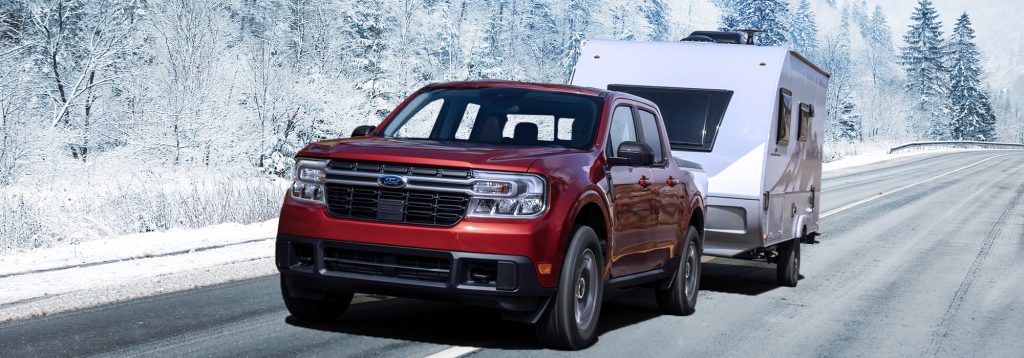
The Ford Maverick is Ford’s compact pickup, and while it may not be the first vehicle you think of for winter driving, it’s a surprisingly capable choice. With available all-wheel drive, the Ford Maverick is ideal if you want to tackle snow-covered roads. The Ford Maverick’s all-wheel drive system, coupled with its selectable drive modes, including Slippery mode, allows for increased stability and control when the roads become treacherous. It also has a decent ground clearance, making it easier to manage light snow accumulation. The Ford Maverick’s efficient design doesn’t sacrifice performance, making it one of the best Ford models in the snow for those on a budget who need a reliable winter vehicle.
Ford F-150 In The Snow
The Ford F-150 is a legendary favorite among truck lovers, and it’s no surprise that it excels in winter conditions. With its powerful engine lineup, robust four-wheel drive system, and high ground clearance, the Ford F-150 is built to handle even the most challenging winter roads. Whether commuting in a snowstorm or driving to a remote cabin, the Ford F-150’s impressive capabilities will ensure your safety. One of the standout features of the Ford F-150 is its available four-wheel drive system, which comes with a variety of driving modes, including Slippery for low-traction conditions. For added peace of mind, drivers can equip their Ford F-150 with snow tires, enhancing this best Ford model in the snow’s performance in harsh winter conditions.
Ford Bronco In The Snow
Few vehicles evoke adventure like the Ford Bronco, and that adventurous spirit extends to winter driving. Designed for off-roading, the Ford Bronco performs exceptionally well thanks to its available four-wheel drive system and G.O.A.T. Modes™, including a Sand/Snow setting. Additionally, the Ford Bronco’s advanced traction system helps maintain a grip on slippery surfaces, while its strong frame offers the durability needed to withstand harsh winter conditions. Whether driving on snowy mountain roads or navigating icy back roads, the Ford Bronco is one of the best Ford models in the snow, designed to keep you in control and confident behind the wheel.
Winter Is Coming. Are You Prepared?
At Blake Ford, we believe that winter driving doesn’t have to be something you dread. With the right Ford vehicle, you can face snow-covered roads, icy streets, and winter storms with confidence and peace of mind. Whether it’s the reliable Ford Explorer, the rugged Ford Bronco, or the powerful Ford F-150, our vehicles are built to handle whatever winter throws your way. When winter arrives, don’t settle for less than the best Ford models in the snow to handle any slick conditions. Visit us today in Franklin, VA!
Ford Winter Tire Guide

The Importance Of Ford Winter Tires
Winter driving poses unique challenges due to decreased traction and visibility, making winter tires an essential investment for many vehicle owners. Ford, a leading automotive manufacturer, offers a range of winter tire options tailored specifically for its popular models, including the Ford F-150, Ford Escape, and Ford Ranger. At Blake Ford, we’ll explore the benefits of Ford winter tires for these models, Ford winter tire packages, and key considerations such as tire pressure during winter months. Afterward, you can visit us to shop for your next ride and prepare yourself for the cold season ahead. Please note that the availability of winter tire options may vary based on current stock levels.
Ford Winter Tire Packages
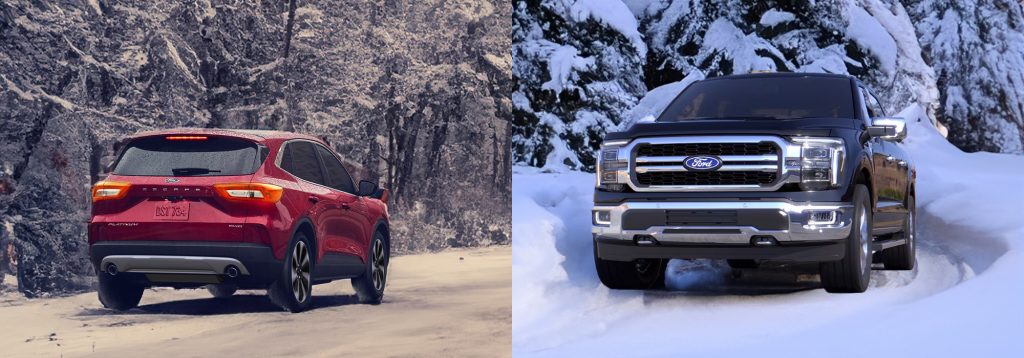
Ford winter tires are designed to perform optimally in cold, icy, and snowy conditions. Unlike all-season tires, which are engineered for a broad range of weather conditions, winter tires utilize specialized rubber material and tread arrangements that are designed to enhance grip and overcome slick surfaces. Ford winter tires typically feature deeper treads with more durable edges to improve traction on snow and ice.
To simplify the winter tire purchasing process, there are Ford winter tire and wheel packages available for various models. They often include a set of four winter tires and wheels specifically chosen for compatibility with the vehicle, along with mounting and balancing services. The package may also include essential components like tire pressure monitoring sensors, ensuring that you receive tires optimized for your vehicle’s performance characteristics and enhancing safety and driving comfort during winter months. Contact your Ford dealer in Franklin, VA, or access our Tire Finder tool through our website to ensure you’re getting the correct size and type for your ride.
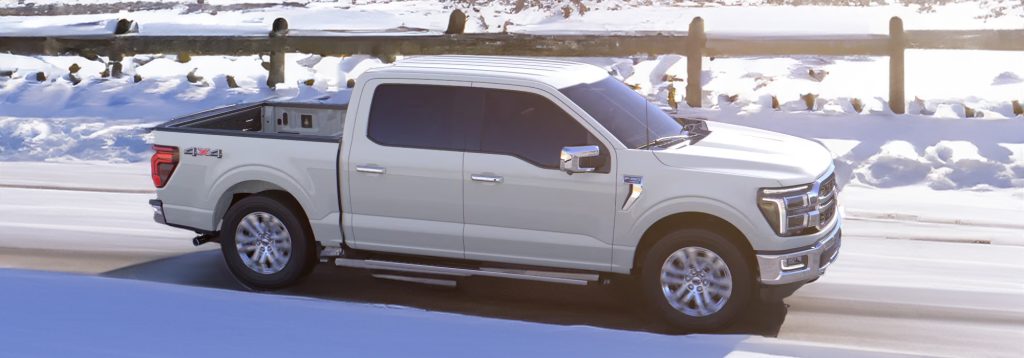
Ford F-150 Winter Tires
The Ford F-150 is America’s Favorite Truck, making it crucial for owners to equip their vehicles with appropriate winter tires. Choosing the right wheels is equally important to ensure optimal performance and safety no matter the weather and driving conditions. These powerful trucks were designed to tackle the heavy load and rugged terrain often associated with truck use while providing reliable traction in winter conditions.

Ford Escape Winter Tires
The Ford Escape is a compact SUV that also benefits significantly from the use of winter tires. These are usually tailored for urban environments and lighter off-road conditions, where snow and icy roads are common. City roads can be equally as tricky to maneuver during the winter, plus other drivers and pedestrians are at risk. This is why it’s important to secure Ford winter tires that provide excellent traction without compromising ride quality.
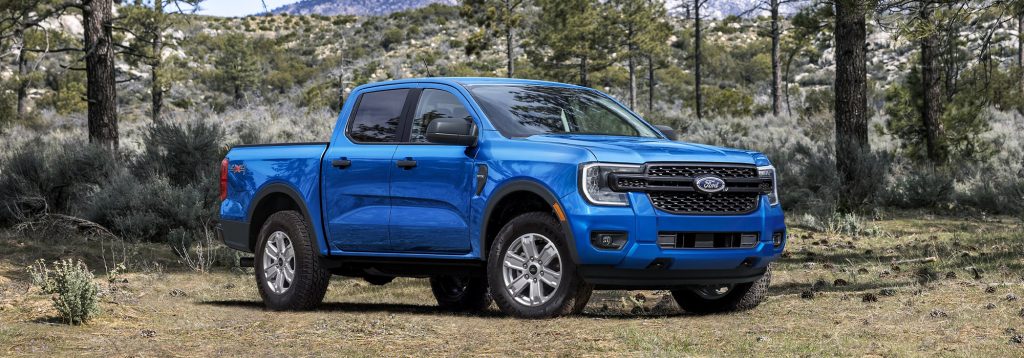
Ford Ranger Winter Tires
The Ford Ranger is a midsize pickup that requires specialized winter tires to navigate challenging conditions. Thanks to winter tires, you can select from options that provide excellent grip and stability. You’ll be able to tow heavy loads with ease and travel more efficiently to get the job done. That said, our staff will help you navigate your Ford winter tire options so your adventures don’t end because of the ice and snow.
Tire Pressure Considerations
Maintaining the correct tire pressure for Ford winter tires is vital for optimal tire performance. Cold weather can cause air to contract, leading to lower tire pressure. You should regularly check your tire pressure by finding out what the normal PSI rating should be. You can easily do this by looking at your tire or by looking at the driver-side door jamb. Whatever this value is, it’s recommended to inflate your tires by 3-5 PSI to help stabilize driving conditions when it’s cold. The design elements of winter tires enhance their pliability in sub-freezing temperatures for better traction on snow and ice, but this can lead to decreased responsiveness to driver input, which is why the 3-5 PSI increase is recommended.
Get Ready for Winter
Equipping Ford vehicles with the appropriate winter tires is a vital step for ensuring safety and performance during the winter months. By understanding the specific needs of each vehicle, including the Ford F-150, Ford Escape, and Ford Ranger, you’ll be able to select tires that best fit your driving habits and conditions. Moreover, regular maintenance and tire pressure checkups are crucial to the success of Ford winter tires. By performing the necessities, you can confidently tackle winter roads wherever you drive. Start your journey by getting in touch with the dealers at Blake Ford, or visit our website to find the right Ford winter tires for you!
Ford Escape Cold Weather Package

Ford Escape Cold Weather Package: What’s Included and Is It Worth It
When it comes to driving in cold climates, comfort and convenience are key. For drivers facing harsh winters or frigid mornings, Blake Ford offers a solution: the Cold Weather Package for the Ford Escape. Whether you’re battling frosty mornings or slippery roads, this package enhances your driving experience by providing features that make cold-weather driving more manageable. The package includes heated seats and mirrors with memory function for added convenience. But is it worth the investment? Let’s break down the details.

Overview of the Cold Weather Package
The Cold Weather Package is an optional add-on for the Ford Escape Active and ST-Line models. It also comes standard with all-wheel-drive models. This package is designed with cold-weather drivers in mind, offering a suite of features aimed at making those winter months more comfortable and safe. For detailed information on using and troubleshooting the Cold Weather Package features, consult the owner’s manual.
Key Features of the Cold Weather Package: Heated Mirrors
The Cold Weather Package includes several must-have features that help keep you warm and improve visibility during icy, snowy conditions.
- Heated Side Mirrors with Rear Defrost: Ice and frost buildup on your mirrors can be a major visibility issue in the winter. The heated side mirrors, with memory settings for mirror positions, along with a rear defrost feature, work to ensure you have a clear view, no matter how frosty it gets.
- Remote Start System: This feature allows you to start your Ford Escape from a distance, warming up the cabin before you even step outside. Imagine switching on the remote start system and stepping into a cozy, warm vehicle on those bitter, cold mornings, ready to go.
- Heated Front Seats: Say goodbye to cold leather or fabric seats! With heated front-row seating, both the driver and passenger can enjoy the comfort of warmth while sitting, making your journey more enjoyable during those winter months.
- Heated Steering Wheel: No need to wear gloves while driving — the heated steering wheel ensures your hands stay warm, providing a luxurious feel during chilly weather.
Benefits of the Cold Weather Package: Rear Defrost
While it’s easy to see how these features provide comfort, they also add a layer of safety and convenience during winter driving. Here are some of the top benefits.
- Enhanced Comfort: The heated seats and steering wheel offer instant warmth, making cold-weather driving more pleasant.
- Improved Visibility: The heated mirrors and rear defrost system work together to give you a clearer view, reducing ice buildup and keeping your sightlines open.
- Convenience: The remote start feature adds a level of ease to your routine, allowing you to warm up your car without stepping into the cold. This significantly reduces the waiting time for your vehicle to reach a comfortable temperature.
- Increased Resale Value: The Cold Weather Package could increase the appeal of your vehicle when it comes time to sell, especially in markets where cold weather is common.
How the Package Enhances the Driving Experience
The Cold Weather Package transforms the Ford Escape into a winter-ready vehicle. It’s not just about keeping warm — it’s about creating a safer, more convenient driving experience. From the moment you remote start the vehicle and step into a toasty cabin, to the clearer sightlines from the heated mirrors and defrost features, this package ensures you’re better prepared for whatever the winter months throw at you.
The memory function for seats and mirrors adds to the personalized comfort, allowing you to recall your preferred settings effortlessly.
Additionally, the heated steering wheel and seats make those longer winter drives far more comfortable. This package really is about enhancing both your comfort and the functionality of your vehicle in the colder months.
Is the Cold Weather Package Worth It?
If you live in a region where winter weather is more than just a few flurries, the Cold Weather Package is likely a great investment. The comfort and safety benefits that it adds to the Ford Escape make driving in winter conditions far more manageable. While you may be unsure about the added cost, it’s a price that quickly pays off in terms of convenience, warmth, and enhanced driving experience. For detailed information on the package’s features and maintenance tips, consult the owner’s manual.

Why the Cold Weather Package Is a Smart Choice for Winter Driving
For those living in colder climates, the Ford Escape’s Cold Weather Package is a well-rounded option that combines convenience, comfort, and safety. Whether it’s the remote start system, heated mirrors, or the luxurious feel of a heated steering wheel, this package delivers a more enjoyable driving experience. While it does add to the vehicle’s overall cost, the benefits you gain make it a worthy investment — especially when faced with winter’s harshest elements. Sitting in a warm vehicle during winter mornings significantly enhances comfort.
If staying warm and safe during the winter months is a priority, the Ford Escape Cold Weather Package is an add-on you shouldn’t overlook.
Ford F-150 Maintenance Guide

Ford F-150 Recommended Maintenance Schedule
Maintaining your Ford F-150 involves recognizing how crucial each maintenance activity is to guarantee the longevity of your vehicle’s overall health. Every part of your Ford F-150 works together seamlessly, from regular oil changes that help the engine run smoothly to replacing the spark plugs for maximum fuel efficiency. At Blake Ford, our specialized team of technicians is dedicated to helping you keep your truck in top working condition through detailed Ford F-150 maintenance and inspections. Schedule your next service appointment online today!
Always consult your owner’s manual for a more complete maintenance schedule to guarantee your vehicle’s optimal performance and durability.

Routine Maintenance Schedule: What To Expect During Service At Each Mileage
Oil and Oil Filter Replaced
As part of your routine Ford F-150 maintenance plan, it’s essential that you replace the oil and have the filters replaced around every 5,000 to 10,000 miles. Engine oil keeps your truck’s engine components free from friction and damage and the oil filter prevents build-up of clogging debris.
Rotate Tires
Extend the lifespan of your Ford F-150’s tires by performing tire rotation at regular service intervals, ideally around every 5,000 miles. This crucial maintenance task also helps to improve traction both on and off the road for a much safer and more controlled driving experience.
Inspection Of Belts, Hoses, and Fluids
Every time you bring your Ford F-150 for maintenance, you have an excellent opportunity to inspect every belt, hose, and fluid tank for potential signs of trouble and to replace any brake, transmission, coolant, or windshield washer fluid, as well as check the drive belts.
Ford F-150 30K Mile Maintenance: Replacing Filters and Fluids By Mileage
Replace Engine Air Filter
When the engine air filter becomes clogged, it can lead to decreased engine power and heightened fuel usage. To safeguard your engine against dirt, dust, and other contaminants for maximum efficiency and high-level performance, replace the engine air filter around every 30,000 miles for optimal operation.
Cabin Air Filter Replaced
Prevent any build-up of allergens, dust, or pollutants within the cabin of your Ford F-150 in the air conditioning system by replacing the cabin air filter around every 20,000 miles.
Fuel Filter Replacement
Avoid any excess contaminants from building up in your Ford F-150’s engine by replacing the fuel filter around every 30,000 miles. Too much build-up from debris can lead to poor engine performance and fuel efficiency.
Transmission Fluid Service
Transmission fluid and filters can be contaminated and degrade over time, leading to shifting problems and possible transmission damage. Regularly servicing your transmission fluid approximately every 30,000 miles is crucial for ensuring smooth gear shifting and extending your transmission’s lifespan.
Lubricate Ball Joints
Ball joints are crucial for achieving smooth and accurate handling of the front tires. To minimize wear and extend their lifespan, it’s recommended to lubricate the ball joints around every 30,000 miles as part of the regular Ford F-150 maintenance plan.
Ford F-150 Maintenance After 60,000 Miles: Replacement And Flushing By Mileage
Clean and Repack Wheel Bearing
At your Ford F-150 maintenance appointment around every 60,000 miles, have our technicians clean and repack the wheel bearings with fresh grease to help the tires keep turning without any issues.
Replace Spark Plugs
Spark plugs typically require replacement around the 90,000-mile mark and are crucial for igniting the engine’s air fuel mixture within its cylinders. Worn out spark plugs often lead to engine misfiring and a decline in engine performance.
Cooling System Flush
Flushing your vehicle’s cooling system at around 100,000 miles eradicates built-up contaminants, keeping the engine healthy and cool. Over periods of regular use, coolant becomes contaminated, leading to an overheated engine and poor performance.
Positive Crankcase Ventilation Valve Replacement
Replacing the PCV valve at your Ford F-150 maintenance appointment around every 20,000 miles after 100,000 miles helps prevent harmful gas buildup in the truck’s engine.
Replace Differential/Gear Oil
It’s essential that around every 50,000 miles after the 100,000 milestone the differential and gear oils get replaced, as they can break down over time. These are vital for lubricating the gears of your truck’s drivetrain, and when not replaced, can put excessive wear on the gears.
Ford F-150 Maintenance Cost: Vehicle Care Prices Following The Maintenance Schedule
Overall, the total cost for maintenance of your Ford F-150 can range depending on the age of the vehicle, personal driving habits, how often you take the truck off-road, specific model years and trim, and the cost at our service center during your Ford F-150 maintenance appointment.

Taking Care Of Your Ford F-150: Vehicle Maintenance Care For Your Truck
By diligently sticking to a routine schedule of maintenance for your Ford F-150, you not only prevent small issues from developing into major concerns, but also save significant time and money while alleviating stress over the long term. At Blake Ford, our team of expert technicians is committed to your satisfaction, providing you with the best advice and exceptional service to maintain your Ford F-150 and keep it in prime condition. Book your next maintenance visit online today!
Ford Explorer Maintenance Guide

Keep It Moving With Regular Maintenance
Your Ford Explorer plays a huge role in your day-to-day life, helping you to navigate between trips to the grocery store, along road trips, and taking the kids to school. To ensure that your Ford Explorer delivers the performance, reliability, and safety that this incredible SUV is known for, it’s important to regularly make your Ford Explorer’s maintenance appointments on time. At Blake Ford, we are dedicated to helping you get the most out of your vehicle, and our team of certified Ford technicians is here to help support you with expert care tailored to your vehicle’s unique needs. Visit us today in Franklin, VA!

Ford Explorer Maintenance Schedule
Routine Maintenance
Oil and Filter Change: It’s vital that you regularly have the engine oil and oil filter of your vehicle changed to maintain engine health, which should be addressed around every 5,000 miles at your Ford Explorer’s maintenance appointment. Adding fresh oil to your vehicle lubricates the engine components, reducing wear and tear.
Tire Rotation and Inspection: Rotating your tires promotes even tread wear, extending their lifespan, and also helps the technician to identify issues such as uneven wear or damage like holes and nails. This service should be performed ideally at the same time as your oil and filter change as part of a regular vehicle tune-up.
Brake Inspection: Around the same time as getting your oil and filter changed, alongside tire rotation and inspection, have the technician check the brake system of your vehicle, including pads, rotors, and fluid levels.
Ford Explorer Maintenance At and Before 30,000 Miles
Multi-Point Inspection: Around every 15,000 miles, your technician should perform a comprehensive check of the exhaust system, steering system, brakes, and cooling system to ensure overall vehicle longevity, performance, and safety.
Engine Air Filter Replacement: Having your automotive technician install a new air filter to your engine around every 20,000 miles enhances the overall fuel efficiency and engine performance of your Ford Explorer, only allowing clean air to enter the engine.
Cabin Air Filter Replacement: Additionally, replacing the cabin air filter at the same Ford Explorer maintenance appointment as the engine filter ensures that only clean, fresh air circulates inside your vehicle, keeping up pollutants, toxins, and allergens.
Transmission Fluid Check: Your Ford Explorer’s transmission requires clean, fresh fluid that’s free from contaminants to lubricate its components. Regularly checking transmission fluid levels around every 30,000 miles helps with smooth gear shifting and prolongs the transmission’s lifespan.
Lubricate Ball Joints: To prevent rough steering, you must have the ball joints of your vehicle lubricated in order to maintain smooth steering and suspension performance around every 30,000 miles at your Ford Explorer’s maintenance appointment.
Ford Explorer Maintenance After 60,000 Miles
Clean and Repack Wheel Bearing: To prevent excess wear and tear on the vehicle, cleaning and repacking wheel bearings must be completed to ensure smooth wheel rotation and properly controlled handling of your Ford Explorer. Have your technician perform this service around every 60,000 miles at your Ford Explorer’s maintenance appointment.
Replace Spark Plugs: Spark plugs operate as the source of power that ignites the air-fuel mixture in the engine, allowing it to start properly. Change out the spark plugs around every 90,000 miles to ensure efficient combustion and maintain the engine’s performance.
Coolant System Flush: Flushing your Ford Explorer’s coolant system helps prevent engine overheating by preventing buildup, maintaining optimal engine temperature, and extending its longevity. This service should be performed at your Ford Explorer’s maintenance appointment around every 100,000 miles.
Fuel Filter Replacement: At the same appointment, have your technician replace your vehicle’s fuel filter. A clean fuel filter ensures the fuel system operates efficiently, providing the engine with clean fuel for optimal performance.
Positive Crankcase Ventilation Valve Replacement: During the 100,000-mile appointment, your technician should also replace the PCV valve to reduce emissions from your vehicle by removing harmful gases from the engine.
Transfer Case Fluid Replacement: If you have a four-wheel-drive Ford Explorer model, replacing the transfer case fluid around every 60,000 miles ensures that the drivetrain operates smoothly and reliably so you can safely take your vehicle off-road or in inclement weather conditions.
Serpentine/Drive Belt Replacement: Also, around 100,000 miles, replace the serpentine belt to prevent potential breakdowns so that your vehicle’s engine components can run smoothly and efficiently.
Differential/Gear Oil Replacement: Finally, at the 100,000-mile Ford Explorer maintenance appointment, have your technician change the differential oil to ensure that your vehicle maintains smooth operation of gears and axles for the remainder of its lifespan.
Ford Explorer Hybrid Maintenance
Drivers of the Ford Explorer Hybrid model will find that their vehicle does not require quite as much maintenance as the regular gas model due to its hybrid powertrain, which contributes to less wear and tear on certain aspects of the powertrain. For the most part, drivers should still follow the routine Ford Explorer maintenance list to maintain the health and longevity of their vehicles. The only exception is having the high-voltage battery, battery cooling system, and regenerative braking system inspected and replaced as needed.
Ford Explorer Maintenance Costs
Maintaining your Ford Explorer involves various costs, which can vary based on factors such as location, service provider, and vehicle condition. Maintenance costs will depend on model year and usage of the vehicle.

It’s Time For Your Next Appointment
The Ford Explorer is an incredible vehicle designed to be long lasting and high performing while delivering on exceptional safety and reliability. Following our recommended maintenance schedule and making routine Ford Explorer maintenance appointments, you can avoid costly repairs and enjoy consistent peace of mind on the road. At Blake Ford, we believe that proactive maintenance is the key to keeping your vehicle healthy, and our skilled technicians are passionate about providing top-tier service for our customers. Booking your next appointment online is as easy as 1-2-3, and you can schedule your next service appointment through the convenient tool on our website. Visit us today in Franklin, VA!
Ford Escape Maintenance Guide

Maintaining Your Ford Escape
Renowned for its durability and reliable engineering, the Ford Escape stands up to every adventure and daily drive with unwavering performance. Staying on top of your Ford Escape’s maintenance is key to keeping your beloved SUV running for years to come. At Blake Ford, our team of Ford technicians is dedicated to offering you the highest level of certified quality service and everything you need to know to help keep your Ford Escape in top shape. Schedule your next service appointment online today!
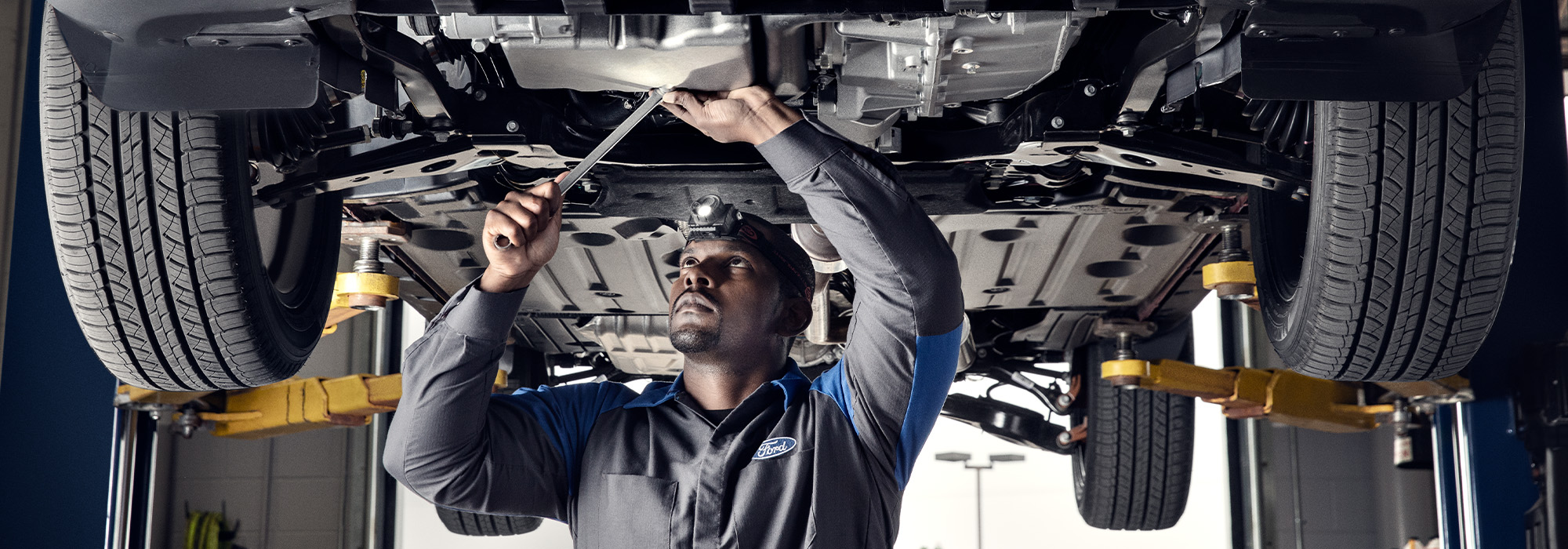
Ford Escape Maintenance Schedule
Routine Maintenance
Oil Change and Filter Replacement: The key to a long-lasting vehicle is regular oil changes, as oil minimizes wear by reducing friction and cooling the engine. To maintain a clean and lubricated engine, we advise that you have the oil and filter changed by a professional every 5,000 miles.
Tire Rotation: To prolong the lifespan of your tires while promoting even wear, tire rotation should be performed every 5,000 miles during your Ford Escape maintenance appointment. This also allows the technician to check for and remove any debris, such as nails or glass, that might lead to a flat tire later.
Brake, Belt, and Hose Inspection: To avoid major problems in the future, regular checks on your brakes, belts, and hoses at every appointment are essential. Checking the braking system ensures your safety on the road, while the belts power several engine parts and the hoses carry vital fluids throughout your vehicle. Inspection around every 5,000 miles prevents any unexpected problems like breakdowns.
Mileage-Based Maintenance At And Before 30,000 Miles
Change Engine Filter: This filter is critical in preventing dirt and debris buildup in the engine and should be changed around every 10,000 miles at your Ford Escape maintenance appointment, beginning when you hit the 20,000-mile mark for optional fuel economy and engine efficiency.
Change Cabin Air Filter: To ensure the air inside your vehicle remains fresh and devoid of dust, pollen, and pollutants, replace the cabin air filter at the same intervals as the engine air filter, starting at around 20,000 miles. This change promotes a healthier driving environment for you and your passengers by minimizing the presence of allergens and toxins.
Transmission Fluid Change: The transmission fluid plays a vital role in cooling and lubricating the transmission components to facilitate seamless gear changes and should be serviced around every 30,000 miles at your Ford Escape’s maintenance appointment.
Lubrication of Ball Joints: Regularly lubricating the ball joints to ensure smooth steering extends the life of the joint, keeping your vehicle’s suspension system running smoothly. This service should ideally be performed around every 30,000 miles.
Fuel Filter Replacement: By filtering out contaminants before they reach your engine, the fuel filter plays a key role in maintaining your engine’s performance and fuel efficiency. Replacing the fuel filter around every 30,000 miles helps sustain these performance levels.
Transfer Case Fluid Change: Transfer case fluid should be changed between 30-60,000 miles to maintain optimal performance and prevent wear on the gears, bearings, and transfer case within the all-wheel and four-wheel drive systems. This mileage will depend on your usage of the car, for example if you regularly tow heavy loads it will need to be changed more often. On two-wheel drive systems, the transfer case fluid does not need to be changed nearly as often.
Vehicle Maintenance After 90,000 Miles
Changing Spark Plugs: Spark plugs are important for properly starting the engine, as they ignite the mixture of air and fuel within the engine’s cylinders. When they’re worn out or dirty, the engine is more likely to misfire, decrease fuel economy, and diminish performance. Have them changed around every 90,000 miles at your Ford Escape maintenance appointment; however, they should be replaced whenever the technician otherwise finds it necessary.
Cooling System Flush: The cooling system circulates coolant throughout the engine and radiator, keeping the engine from overheating. Performing a flush at around 100,000 miles helps prevent buildup while removing old coolant to keep the engine cool and fully functional.
Replace Differential/Gear Oil: Differential and gear oil lubricates the gears and bearings in your vehicle’s differential and transmission, and the oil can break down or become contaminated. Replacing this oil at around 100,000 miles during your Ford Escape’s maintenance appointment helps maintain proper lubrication and extends the life of these critical components.
Positive Crankcase Ventilation Replacement: This system is designed to eliminate and recycle harmful gases from the engine crankcase back into the engine and should be replaced around 100,000 miles. When the positive crankcase ventilation valve fails, it can increase emissions and cause deposits in the engine.
Serpentine/Drive Belts Replacement: These belts are integral to the functioning and well-being of various vehicle components like the alternator, power steering pump, and air conditioning compressor. To avoid belt failure and ensure smooth operation of engine accessories, replace them around 100,000 miles.
Ford Escape Hybrid Maintenance
Ford Escape Hybrids receive different and often less frequent maintenance than the conventional gas model due to the hybrid power trail. Components specific to the hybrid system, like the high-voltage battery and electric motor, don’t require as frequent maintenance, but the regenerative braking system and battery’s cooling system should be evaluated during every routine maintenance appointment by professional technicians.
Ford Escape Maintenance Costs
The overall expense of your Ford Escape maintenance appointments will vary depending on your local service center and your usage of the vehicle.

Time For Your Maintenance Check
Keeping up to date with regular maintenance in a timely manner while also consulting your vehicle’s operating manual can guarantee that your vehicle continues to perform to premium standards while ensuring safety and comfort for you and your passengers. At Aschenbach Ford, we’re committed to providing quality service during your Ford Escape maintenance appointment, and our experienced mechanics are here to help ensure your vehicle operates flawlessly. Use our online scheduling tool to book your service appointment today!
Ford Bronco Maintenance Guide

Level Up With Expert Vehicle Maintenance
Owning a Ford Bronco and Ford Bronco Sport is loads of fun, as it involves embracing a lifestyle of adventure, rugged reliability, and unmatched off-road performance. Keeping your vehicle in top condition following the Ford Bronco and Ford Bronco Sport maintenance schedule is essential as you rip around rough terrain so that you can ensure longevity and fun with your vehicle for years to come. At Blake Ford, we understand the pride and joy that comes with owning a Ford Bronco or Ford Bronco Sport, and we’re committed to helping you maintain that connection through regular, meticulous Ford Bronco maintenance. Our team of expert technicians are available to help handle every aspect of your vehicle’s needs during your appointment, preserving the integrity of your vehicle and enhancing your off-road driving experience. Schedule an appointment with Blake Ford of Franklin today!

Ford Bronco Maintenance Schedule
Routine Maintenance
Oil and Filter Change: Regular oil changes around every 5,000 miles are vital for keeping your Ford Bronco or Ford Bronco Sport’s engine healthy in the long run, ensuring that the engine remains lubricated and runs efficiently.
Tire Rotation: Promote the even wear of your tires by having them rotated around every 5,000 miles, which helps to guarantee proper handling during every drive.
Visual Inspection Of Brakes, Belts, Hoses, Fluid Leaks: Have your Ford Bronco and Ford Bronco Sport’s brakes, belts, and hoses inspected around every 5,000-mile Ford Bronco maintenance appointment. This ensures that your technician detects and identifies problems early to avoid severe issues and costly repairs.
Vehicle Maintenance At And Before 30,000 Miles
Inspect and Replace Engine Air Filter: Have your vehicle’s engine filter inspected and replaced around every 15,000 miles to keep your engine clean and free of debris that could cause clogs or reduce engine performance.
Inspect and Replace Cabin Air Filter: During your Ford Bronco maintenance appointment to check the engine filter, have the technician inspect the cabin air filter to see if it needs replacement. This component helps to keep the air in your cabin clean and pollutant-free so that you and your passengers can stay healthy.
Inspect and Replace Brake Pads/Rotors: Your technician should monitor the brake pads and rotors to ensure they function properly around every 15,000 miles. This can prevent unwanted and potentially dangerous surprises when on the road and slowing to a stop.
Inspect and Replace Tires: Have your vehicle’s tires inspected and potentially replaced during the Ford Bronco maintenance appointment every 20,000 to 30,000 miles to guarantee proper traction and handling while also alerting you to any potential damage caused by nails or glass debris.
Brake Fluid Change: Brake fluid transfers the force from braking to the brake components, enabling the vehicle to stop when needed. Change the brake fluid around every 30,000 miles to prevent brake failure and ensure the system remains responsive and reliable.
Engine Coolant Change: Also known as antifreeze, engine coolant helps regulate the engine’s temperature by absorbing heat and dissipating it through the radiator. Have your technician check and replace the coolant during your Ford Bronco maintenance appointment around every 30,000 miles to prevent damage or overheating.
Transmission Fluid Change: Transmission fluid lubricates the moving parts within the transmission, facilitating smooth gear shifts and preventing overheating. Replace the transmission fluid around every 30,000 miles.
Inspect and Replace Spark Plugs: Spark plugs ignite the air-fuel mixture in the engine’s cylinders, generating the power needed to drive. Your technician should inspect the spark plugs around every 30,000 miles to ensure they’re not worn, which leads to misfires, poor fuel economy, and reduced performance, and replace them if wear is found.
Service After 50,000 Miles
Inspect and Replace Motor Mounts: Motor mounts help to secure the engine and transmission to the vehicle’s frame and can wear down or break over time, especially if you’re regularly taking your vehicle off the road. Inspecting and replacing them during your Ford Bronco maintenance appointment every 50,000 to 60,000 miles helps keep the most essential parts of your vehicle in place for smooth operation.
Inspect and Replace Drive Belts and Hoses: These parts are essential for operating the alternator, power steering pump, and air conditioning compressor. Over time, they may crack, leak, or fray and eventually fail if not inspected and replaced around every 50,000 to 60,000 miles.
Inspect and Replace Suspension Bushings: To prevent excess noise and vibrations, have the suspension bushings inspected and replaced, if necessary, around every 50,000 to 60,000 miles to ensure quality handling, stability, and comfort.
Inspect and Replace Shock Absorber/Strut: During your Ford Bronco maintenance appointment around every 75,000 to 90,000 miles, have your vehicle’s shock absorber and struts inspected and replaced. These components are critical for proper suspension, as they control the movement of the vehicle’s springs and can wear out over time.
Inspect and Replace Engine Coolant Hose: The engine coolant hose circulates coolant between the engine and radiator. Over several thousand miles, this component can deteriorate, crack, or leak, leading to coolant loss and engine overheating. If damage is found during inspection around every 75,000 to 90,000 miles, it should be replaced.
Ford Bronco Maintenance Cost
Understanding the potential costs associated with regular maintenance of your vehicle is essential for good financial planning, as staying ahead of schedule with saving and budgeting can prevent unexpected surprises. Your maintenance costs will depend on your driving habits and what you’re using the vehicle for.

Promising You Quality Maintenance
Just as you’re committed to having as much fun as possible on every off-road adventure, so should you commit to regular maintenance to keep your Ford Bronco or Ford Bronco Sport functioning at its best. From daily commutes to off-road escapades, providing the safety, efficiency, and longevity you expect from this iconic vehicle is essential for years of adventures to come. At Blake Ford, we’re dedicated to providing our customers with a high-quality Ford Bronco maintenance experience, providing the highest standard of care and transparency about our Ford Bronco and Ford Bronco Sport maintenance costs. Our master-certified technicians use state-of-the-art tools and genuine Ford parts to ensure that every service performed on your vehicle meets manufacturer-level specifications. Book your next appointment through our convenient online scheduler!
Connect with us

